Magic Rampage
- 4.6
- Rating
- 10.00M
- Installs
- Free
- Price
 Analysis by App-foxy
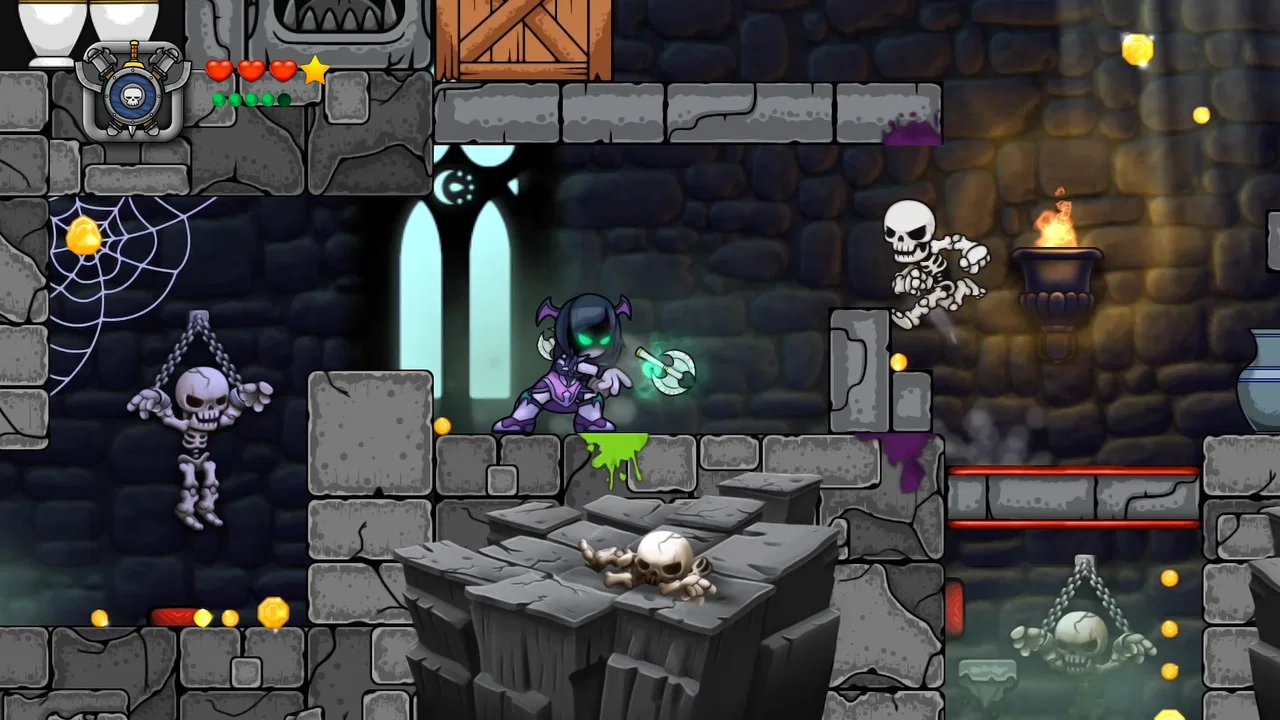
I went into Magic Rampage expecting a fairly familiar mobile role-playing game, but its mix of platforming and combat gives it a more hands-on feel than a typical menu-driven RPG. Instead of mainly choosing attacks from a list and watching numbers rise, I spend much of my time moving through dangerous spaces, reacting to enemies, and trying to keep control of my character while exploring. That makes it easy to understand in short sessions, yet demanding enough to reward patience.
Developed by Asantee Games, this free game sits in the role-playing category with a Teen content rating. It has been available since March 4, 2015, and its long presence on mobile is reflected in a 4.6 average from around 773 thousand ratings, alongside more than 10 million installs. Those figures do not automatically make a game enjoyable, but they do suggest that its particular blend of action, platforming, and character progression has found a substantial audience.
How the free model affects the experience
The most important thing to understand before installing it is that the game is free to start, while optional in-app purchases range from $1.99 to $21.99 per item. That gives me a straightforward way to test the core experience without paying first. For someone unsure whether a platforming RPG is a good fit, this is a meaningful advantage: I can learn how the controls feel, see whether the combat rhythm suits me, and decide later whether spending anything would improve my experience.
You May Also Like

 Blood Strike: 2.5 Anniversary
Blood Strike’s Loadouts Turn Every Drop Into a Tactical Gamble
A close look at Blood Strike’s custom loadouts: how fast access to signature weapons reshapes its battle royale rhythm, rewards preparation, and narrows the gap between fights.

 Pandora - Music & Podcasts
Pandora’s Music Is Easy to Start, but Harder to Recover
Pandora’s strength is its low-effort path from a seed to a station. Its weak spot is how much confidence it asks you to place in connection, setup, and quiet recovery.

 8 Ball Pool
 Is Built on Rivalries, Rematches, and Routine
A close look at the rivalries, rematches, shared routines, and unanswered safety questions that turn a quick pool match into a persistent mobile community.

 Samsung Music
’s Quiet Strength Is Playing What You Already Own
Its reach comes less from spectacle than from dependable access to a personal library. That simplicity is both the app’s strongest retention engine and its ceiling.

 AccuWeather: Weather Radar
AccuWeather Review: A Quick, Clear Forecast for Everyday Decisions
For everyday plans, the best forecast is the one you can understand quickly. AccuWeather makes rain timing, radar, and local conditions easy to act on, with a few trade-offs.

 Hill Climb Racing
Why Hill Climb Racing Still Turns Crashes Into One More Run
A tiny car, a bumpy hill and one more upgrade: Hill Climb Racing keeps resurfacing because its simple chaos makes every near-miss feel personal.
More From Our News Desk
View All News


I would not describe the free entry point as the same thing as guaranteed unlimited value. The game asks for attention and practice rather than simply handing over progress, and players who dislike any temptation to spend should approach it with a personal limit in mind. The purchase range is clear, but the right question is not whether the game costs nothing to download. The better question is whether the free portion already gives you enough enjoyment to justify your time, because that is where the strongest value decision happens.
I appreciate this model most when I treat the game as a compact action title rather than as a purchase I must complete. I can play for a while, put it down, and return when I want another attempt. If I later decide to buy something, that choice should come from wanting to support or extend my play, not from assuming that payment will replace learning the levels or mastering movement.
The current version is 7.8.7 and it requires Android 6.0 or later. That makes checking device compatibility a sensible first step for anyone using an older phone or tablet. The game is also free to access, but the Teen rating means it is better suited to older children, teenagers, and adults than to very young players. I would keep that rating in mind when deciding whether it belongs on a family device.
Why the platforming changes the RPG formula
The central appeal is the way role-playing progression is tied to direct movement. In a conventional mobile RPG, I might concentrate on equipment screens, ability selections, or automated battles. Here, those decisions matter alongside the physical act of getting through a stage. A strong character can still struggle if I mistime a jump, move carelessly, or enter a fight from a bad position. That connection between preparation and execution gives every improvement a practical purpose.
The platforming also makes replaying a section more informative than simply repeating a battle. When I fail, I can usually think about what went wrong: I rushed, misread a hazard, attacked at the wrong moment, or entered an encounter without enough control over the space around me. That creates a useful learning loop. I am not only raising a character; I am becoming better at reading the game.
One of my favorite habits is to separate exploration attempts from progress attempts. On the first pass through an unfamiliar area, I focus on observing enemy behavior and the layout rather than trying to move quickly. On the next attempt, I use that knowledge to make cleaner decisions. This sounds simple, but it prevents the common mobile-game mistake of treating every failure as a reason to grind. In this game, better timing can sometimes be more valuable than merely seeking more power.
The action is also why this will not satisfy everyone looking for a relaxed role-playing experience. If you want a game that can be played mostly with one hand while your attention is elsewhere, this is not the safest recommendation. Platforming requires concentration, and combat becomes less forgiving when I am distracted. It works better during a focused break than during a commute where the phone is constantly interrupted.
Controls, pacing, and the value of short sessions
On a touchscreen, the quality of the experience depends heavily on how comfortable you are with virtual controls. I find the game most enjoyable when I give myself a few minutes to settle into its movement rhythm instead of judging it during the first careless attempt. Small errors feel more significant in a platforming environment than they would in a turn-based RPG, so the early learning period can seem harsher than expected.
That said, the stage-based structure suits everyday play. If I have a short break after lunch or a few minutes before bed, I can make a meaningful attempt without committing to a long story session. The best routine is to stop after a successful improvement rather than continuing until frustration takes over. Because mistakes are part of the progression, ending on a clear lesson makes returning later feel more purposeful.
A useful practical tip is to avoid changing several parts of your approach at once. If I alter equipment, movement style, and combat habits simultaneously, I cannot tell what actually helped. I prefer to change one factor, replay a familiar section, and judge the result. This is especially helpful for players who feel that their character is weak when the real issue may be positioning or timing.
Progression that rewards attention, not only investment
The RPG layer gives the action a longer-term reason to matter. Preparation can make difficult encounters more manageable, but it does not erase the need to play carefully. That balance is important to me because it avoids making progress feel entirely dependent on statistics. I enjoy games more when a better result can come from understanding a challenge rather than simply waiting for a stronger number.
There is a trade-off here. Players who love optimizing characters may want deeper management than the platforming focus provides, while players who mainly want fast action may find progression screens a pause in the momentum. I see the game as sitting between those audiences. It is not best approached as a full-time character-building simulator, and it is not merely a reflex game with decorative role-playing elements.
My most effective workflow is to prepare before repeatedly attacking the same obstacle. I review what I am using, consider whether my current approach matches the challenge, and then make a deliberate attempt. If that fails, I look for a tactical mistake before assuming I need to spend money or grind. This keeps the free experience feeling more meaningful and reduces the temptation to treat every wall as a payment problem.
Where the value is strongest—and where it weakens
The strongest value comes from the combination of replayable action and character development. A player who enjoys learning patterns, improving movement, and seeing preparation pay off can get much more from each session than someone who only wants a quick distraction. The free access makes that discovery process low-risk. I can decide based on actual play rather than on screenshots or a short description.
Another advantage is its clear identity. Many mobile role-playing games lean heavily on automated battles, repeated collection, or passive progression. Magic Rampage asks me to participate directly. That makes it a better alternative for someone who has tried conventional mobile RPGs and found them too passive. It also gives the game a stronger sense of personal responsibility: when I succeed, I usually feel that my decisions contributed.
The limitation is equally clear. Direct control can turn a casual session into a demanding one, particularly when I am tired or using a device whose touchscreen response feels uncomfortable. A turn-based RPG would be a better choice for someone who wants time to consider each move. A traditional action game without role-playing management could be better for someone who wants immediate combat and little preparation. This game asks for both.
The purchase option adds another layer to the decision. Since the game is free to access and individual purchases can cost between $1.99 and $21.99, I would judge optional spending by how much I am already using the game. If I only play occasionally, paying may not add enough value. If I return regularly because I enjoy the challenge, a purchase can be considered as a personal choice, but it should not be treated as a substitute for learning the controls.
I also recommend deciding in advance what “enough” means for you. For me, that might mean finishing a particular stretch, improving at a difficult type of encounter, or simply confirming that I enjoy the platforming. Setting that goal prevents the free-to-play structure from becoming the main focus. The game is at its best when purchases remain secondary to the actual play.
Who will get the most from it?
I would recommend it first to players who like classic-style platforming but want more progression than a simple arcade run. It is also a good fit for mobile RPG fans who feel that automated combat removes too much involvement. If you enjoy replaying a section to improve your route, adjusting your approach after a failed attempt, and balancing character preparation with real-time movement, this is a particularly sensible free download.
It can work well in an everyday scenario such as a short evening break when I want something more engaging than a passive game but do not have time for a large console-style adventure. I can make one focused attempt, identify a mistake, and stop without feeling that I have lost an entire evening. The important condition is that I am willing to concentrate. Playing while multitasking makes the game feel more frustrating than it really is.
I would be more cautious about recommending it to a player who dislikes repeated attempts. Failure is not an unusual interruption here; it is part of how the platforming challenge teaches you. Someone who wants a calm story, automatic progress, or a mostly hands-off RPG may be happier elsewhere. The Teen rating also means parents should consider whether the tone and action suit the intended player.
For younger players who are ready for a challenge, the controls and spending model deserve adult attention. Free access is convenient, but optional purchases still exist, so family devices should be handled with the same care used for other games with in-app buying. I would not install it solely because it has no upfront price; I would install it because the player genuinely likes action platforming and can use the purchase features responsibly.
My final recommendation
After spending time with it, I see Magic Rampage as a worthwhile choice for a specific kind of mobile player rather than a universal role-playing recommendation. Its best idea is the link between character development and physical skill. Progress feels more satisfying when I understand why a run improved, whether that came from better preparation, cleaner movement, or a more careful response to an enemy.
The free starting point is its biggest practical advantage. I can test the controls, pacing, and difficulty without paying, while the optional purchases provide a separate value decision rather than an entry requirement. I would keep expectations realistic: the game still demands attention, repetition, and patience, and spending should never be assumed to remove those demands.
My verdict is to try it if you want an action-focused RPG platformer and are comfortable learning through failure. Start without buying anything, play in short focused sessions, and change one strategy at a time when a section gives you trouble. If you prefer automated battles, relaxed turn-based choices, or a game that never asks for precise movement, skip it and choose a more conventional RPG instead.
For me, the free access makes that recommendation easy because the risk is low and the identity is clear. It is not simply another role-playing game with a few action scenes attached. It asks me to move, react, prepare, and improve. When those four parts sound enjoyable, the game offers strong value for the time invested; when they sound tiring, no purchase is likely to change the basic experience.
FAQs for Magic Rampage
01What is Magic Rampage, and what kind of game is it?
Magic Rampage is a fast-paced 2D action platformer with role-playing elements. You explore dangerous levels, fight monsters, avoid traps, collect equipment, and improve your character over time. The game combines classic side-scrolling platform gameplay with different weapons, armor, magical abilities, and character customization, making it suitable for players who enjoy challenging combat and adventure rather than simple casual gameplay.
02Is Magic Rampage free to download and play?
Magic Rampage can generally be downloaded for free on supported Android and iOS devices, although the game may include optional in-app purchases. These purchases can provide extra items, currency, or other conveniences, but they are not necessarily required to experience the main adventure. Players should still check the current store listing because pricing, advertisements, and available purchase options may vary by platform or region.
03Does Magic Rampage require an internet connection?
Many parts of Magic Rampage can be enjoyed offline, which makes it convenient for playing while traveling or when a stable connection is unavailable. However, certain features may require internet access, including online competitions, account-related functions, advertisements, updates, or synchronization. For the best experience, it is recommended to connect occasionally so the game can load current content and save online-related progress correctly.
04Is Magic Rampage suitable for children and beginners?
Magic Rampage is relatively easy to understand because its basic controls focus on movement, jumping, attacking, and using abilities. However, the game becomes progressively more demanding, with enemies, traps, platforming sections, and boss encounters that require timing and practice. Its fantasy violence and challenging gameplay may not suit every child, so parents should review the store rating and in-app purchase settings before allowing younger players to download it.
05What devices are needed to play Magic Rampage smoothly?
Magic Rampage is designed for mobile devices and generally runs well on many modern Android phones, tablets, iPhones, and iPads. Performance can still depend on the operating system version, available storage, memory, and device age. Before downloading, check the official Google Play or App Store listing for current compatibility requirements. Keeping enough free storage and updating the operating system can also help prevent crashes or performance issues.
Pros
- Fast-paced platforming with responsive controls and satisfying combat.
- Large variety of weapons
- armor
- and magical abilities to experiment with.
- Multiple difficulty levels make the game accessible and replayable.
- Story campaign offers plenty of levels
- secrets
- and challenging boss fights.
- Retro-inspired visuals and music create a charming old-school atmosphere.
Cons
- Some stages require repeated attempts to learn enemy patterns and traps.
- Progression can feel grindy when upgrading equipment or unlocking better gear.
- Touch controls may feel cramped during intense fights on smaller screens.
- Optional ads and purchases can interrupt the otherwise smooth gameplay.
- Later challenges may feel punishing without carefully optimized equipment.

Magic Rampage
Gallery